
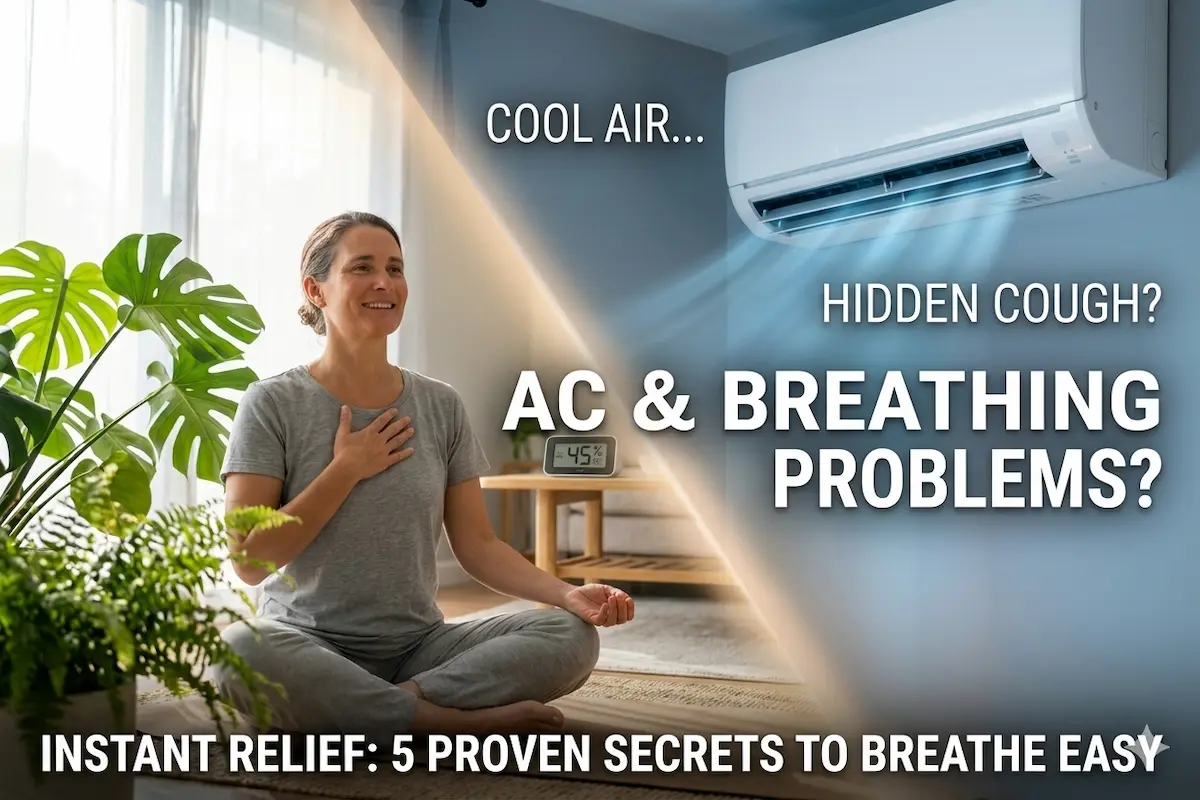
Many people face AC and breathing problems during the peak of summer. Imagine stepping out of a scorching 95-degree afternoon. You walk into the cool air of your living room. You take a deep breath to recover from the heat. However, instead of relief, your chest suddenly feels tight. That familiar “heaviness” settles in quickly. Consequently, every inhale feels like a tough task.
Most people blame the outdoor humidity for their respiratory struggles. Yet, for many, the real culprit is waiting inside the home. While your air conditioner is a lifesaver during a heatwave, it can also become a silent trigger for respiratory distress. Understanding this link is the first step toward reclaiming your comfort. It is not just about the temperature; it is about how your indoor environment affects your lungs.

The Science of Thermal Shock and Airway Constriction
Many people in the United States jump from a 90°F sidewalk into a 68°F office. This sudden shift creates a phenomenon known as “thermal shock.” Your lungs are very sensitive to rapid temperature changes. Consequently, when chilled air hits your windpipe, the muscles may tighten instantly. Doctors call this a bronchospasm.
For someone with sensitive airways, this feels like an invisible band tightening around the chest. It is a common trigger for AC and breathing problems. Cold air is naturally much denser than warm air. Because it holds less moisture, it hits your system with a “sharp” edge. This forces your body to work overtime to warm the air up.
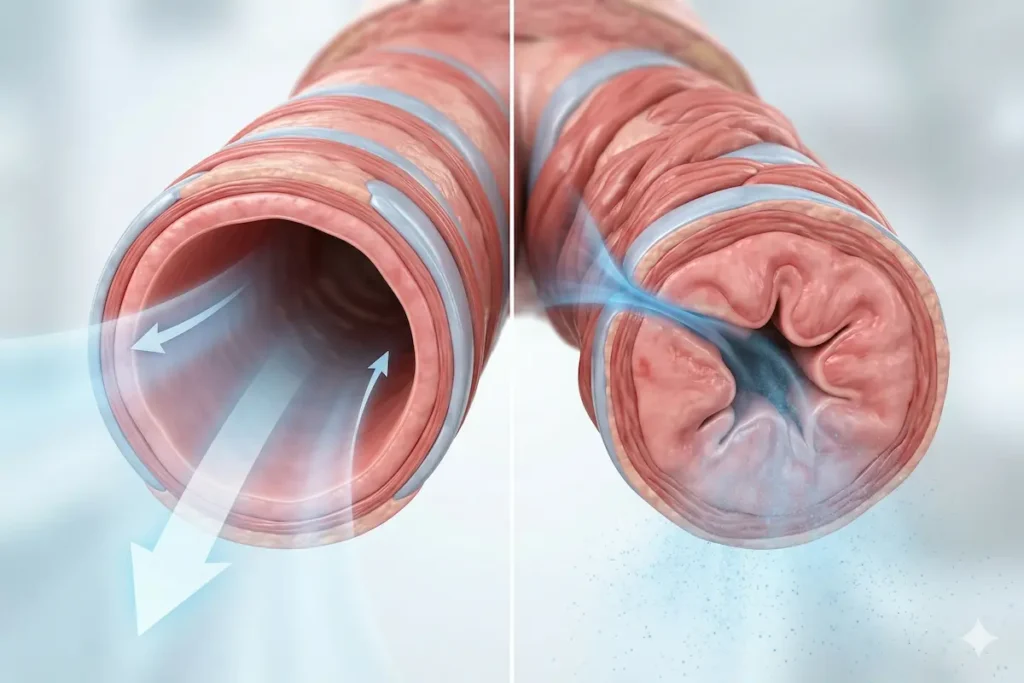
If your system cannot keep up with the chill, you might feel short of breath. Most people blame the outdoor heat for their fatigue. However, the real culprit is often a sudden temperature flip-flop. By understanding this reflex, you can take steps to buffer the transition and protect your health.
“Your lungs are like a finely tuned instrument; sudden shifts in ‘thermal tempo’ can throw the whole performance out of sync.”
The Dehumidification Dilemma (Dry Air Risks)
Air conditioners act as powerful dehumidifiers. While this stops the “sauna feel” in your home, it often over-dries the air. Your respiratory tract needs a thin layer of fluid to stay healthy. This fluid traps dust and allergens before they reach your lungs.
When the AC strips too much moisture, this protective layer becomes thick and sticky. Instead of clearing your lungs, it sits heavily in your tubes. As a result, you might feel a lingering sensation of congestion. This makes it much harder to catch a full, satisfying breath.
Furthermore, extremely dry air irritates the lining of your throat. You may notice a “scratchy” feeling or a dry cough. This irritation leads to inflammation, which narrows the airways even more. It is a frustrating cycle for many summer sufferers.
To avoid these AC and breathing problems, you must find a “sweet spot.” Aim to keep your indoor humidity between 30% and 50%. If your AC is too large for your room, it may remove moisture too quickly. This leaves your lungs struggling to stay lubricated and clear.
When the AC pulls too much moisture out, the air becomes ‘thin’ and irritating. However, if the humidity is too high, the air feels ‘heavy.’ To understand exactly how these moisture levels affect your lungs, you can refer to my detailed guide on Dew Point vs Humidity for Breathing: The ‘Secret’ 65°F Rule. Keeping your indoor dew point in the safe zone is the easiest way to prevent that sudden chest tightness when the unit is running
“The secret to summer breathing isn’t just about the temperature on the thermostat; it’s about the moisture left in the air.”
The Hidden Danger of Mold and “Dirty Sock Syndrome”
Sometimes, AC and breathing problems are not caused by the air temperature at all. Instead, the issue lies deep within the cooling unit itself. In the humid summers of the United States, moisture often collects on the AC evaporator coils. This dark, damp environment is the perfect breeding ground for mold and bacteria.
When you turn on your unit, it can blast these microscopic spores directly into your living space. Technicians often call this “Dirty Sock Syndrome” because of the musty odor it produces. If you notice a faint, earthy smell when the air kicks on, your lungs are likely inhaling bio-contaminants. These spores trigger immediate inflammation in the bronchial tubes.
Even if you cannot smell it, hidden mold can cause significant respiratory distress. It acts as a constant irritant that narrows your airways over time. This is why many people feel “heavier” indoors than they do outside. Consequently, regular maintenance is not just about saving money; it is a vital part of your respiratory health strategy.

Cleaning your filters every month is a great start. However, a professional deep clean of the coils is often necessary to remove deep-seated growth. By keeping the internal components dry and sterile, you remove a major trigger for summer shortness of breath.
“A clean cooling system does more than lower the temperature; it purifies the very fuel your lungs depend on every second.”
The “Filter Trap” – How Pollen Gets Recirculated
During the peak of summer, pollen counts in many US states reach record highs. You might think staying indoors protects you from these allergens. Unfortunately, your air conditioner can actually trap and recirculate these irritants if the filtration is poor. This creates a concentrated “pollen trap” inside your home.
Standard AC filters are often too thin to catch small particles. As a result, the unit pulls in outdoor air, cools it, and then blows the allergens right back at you. This constant exposure keeps your immune system in a state of high alert. This chronic irritation is a leading cause of AC and breathing problems during the warmer months.
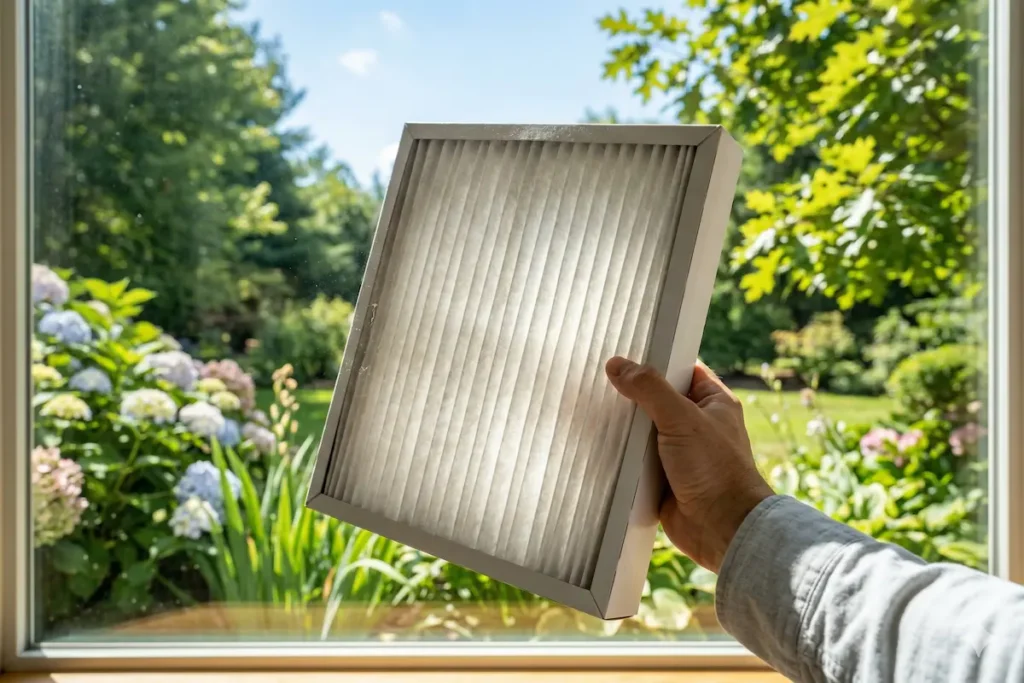
If you suffer from seasonal allergies, consider upgrading to a High-Efficiency Particulate Air (HEPA) filter. These filters are designed to catch much smaller particles that standard ones miss. While they might put more strain on your AC motor, the relief for your lungs is often worth the trade-off.
Furthermore, make sure your windows are sealed tightly when the unit is running. Small gaps allow “unfiltered” humid air to leak in, which carries even more triggers. By creating a truly sealed and filtered environment, you give your respiratory system a much-needed break from the summer haze.
“A True indoor sanctuary is built on filtration, ensuring that the walls of your h1me act as a shield, not a funnel, for outdoor irritants.”
Practical Solutions: How to Balance Cooling and Lung Health
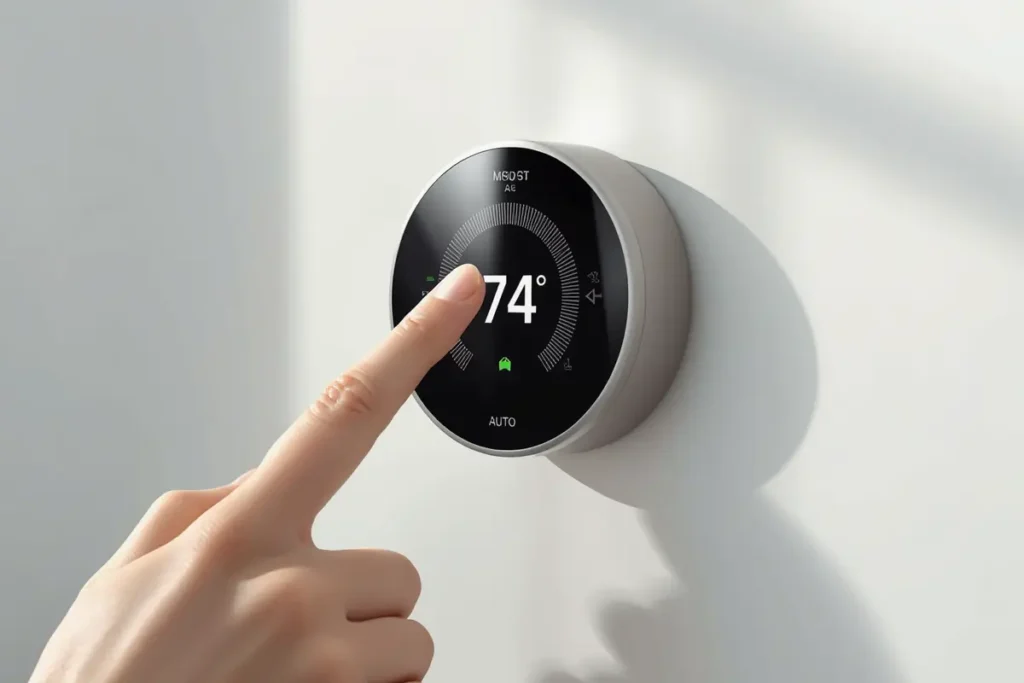
Finding a balance between a cool home and healthy lungs is simpler than it seems. In the United States, many modern thermostat systems offer a “Fan” or “Auto” setting. To reduce AC and breathing problems, experts suggest using the “Auto” mode. This prevents the unit from over-drying the air by only running the compressor when necessary.
Furthermore, you should aim for a gradual cooling process. If you enter a hot room, do not immediately crank the temperature to 60°F. Instead, start at 75°F and lower it by two degrees every thirty minutes. This allows your bronchial tubes to adjust to the shifting density of the air. This “staircase” cooling method is a great way to avoid sudden chest tightness.
Another effective strategy is the use of a hygrometer. This small device measures the exact humidity percentage in your room. If the reading drops below 30%, consider using a small humidifier alongside your AC. This adds back the “lost” moisture that your lungs need to stay lubricated.
Lastly, always position your bed or chair away from the direct blast of the vent. Direct airflow onto the face and chest is a primary cause of airway irritation. By angling the louvers toward the ceiling, you create a gentle, indirect cooling effect. This simple change can drastically reduce your risk of a summer respiratory flare-up.
“True comfort is a delicate dance between temperature and humidity; mastering one requires respecting the other.”
The “Dry Mode” Secret – Your Best Summer Ally
Many homeowners in humid US regions are unaware of a hidden feature on their cooling units. This feature is often labeled as “Dry Mode” or represented by a water drop icon. Unlike the standard “Cool” setting, this mode prioritizes moisture removal over temperature drops. Consequently, it is a game-changer for avoiding AC and breathing problems.

When your unit runs in Dry Mode, the fan speed is lower. This allows the air to spend more time in contact with the cold coils. As a result, it pulls out significantly more water without making the room freezing cold. This creates a “crisp” environment that feels much lighter on the lungs.
This mode is especially helpful during the rainy summer months. During these times, the temperature might not be extremely high, but the humidity is stifling. By using the Dry Mode, you prevent that “heavy” chest feeling without wasting energy. It is an efficient way to keep your indoor air quality at its peak.
Furthermore, this setting helps prevent the growth of mold within the unit itself. By focusing on moisture control, you keep the internal components drier for longer periods. This small shift in how you use your appliance can lead to much better long-term respiratory health.
“Efficiency and health often go hand-in-hand; sometimes the best solution is already programmed into your remote.”
The Transition Habit – Protecting Your Lungs When Moving Outdoors
Stepping from a chilled 68°F living room into a 95°F humid afternoon is a massive shock to your system. In the United States, this “thermal jump” is a frequent cause of AC and breathing problems during July and August. Your lungs must suddenly shift from processing thin, dry air to heavy, moisture-laden air. This rapid change can lead to immediate shortness of breath or a feeling of lightheadedness.

To protect your respiratory health, you should develop a “buffer habit.” Instead of rushing straight outside, try spending five minutes in a transitional area like a garage or a hallway. This allows your bronchial tubes to adjust to the rising temperature more gradually. Furthermore, drinking a glass of room-temperature water before heading out can help keep your airways hydrated.
If you know you will be outdoors for a long time, consider turning your AC up by five degrees about thirty minutes before you leave. This narrows the gap between the indoor and outdoor climates. Consequently, your body does not have to work nearly as hard to regulate its internal temperature. This simple preparation makes a world of difference for your comfort levels.
Finally, always carry a light scarf or a face covering if you are moving between extreme environments. Breathing through a thin layer of fabric can pre-warm and pre-moisten the air before it hits your lungs. This “mechanical buffer” is one of the most effective ways to stop a summer respiratory flare-up in its tracks.
“Your body is a masterpiece of adaptation, but even the best engine needs a moment to warm up before hitting top speed.”
Nighttime Cooling – Why Your Sleep Position Matters
Many Americans suffer from AC and breathing problems, specifically during the overnight hours. When you sleep, your breathing naturally slows down and becomes shallower. If a cold air vent is blowing directly onto your face, it can cause your nasal passages to swell shut. This often leads to mouth breathing, which bypasses your nose’s natural filtration and humidification system.
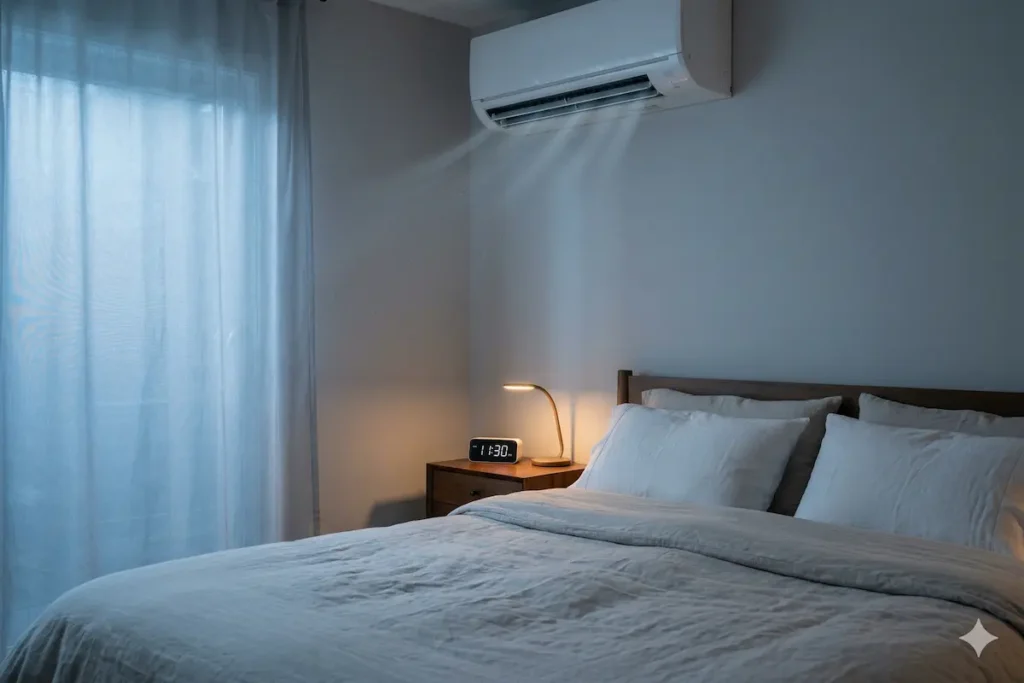
To improve your sleep quality, ensure your bed is not in the direct path of the airflow. Furthermore, using a “V-shaped” or elevated pillow can help keep your airways open. This slight elevation prevents mucus from pooling in the back of the throat, which is common in dry, air-conditioned rooms. By staying propped up, you reduce the physical “heaviness” in your chest.
Another helpful tip is to set a “Sleep Timer” on your AC unit. Many modern systems allow the temperature to rise slightly after you fall asleep. This prevents the room from becoming an ice box by 3:00 AM, which is often when the coldest temperatures occur. This gradual rise matches your body’s natural cooling cycle during deep sleep.
Lastly, consider wearing a lightweight cotton shirt to bed. This protects your chest and back from the “chill factor” of the moving air. By keeping your core warm while the room stays cool, you find a healthy middle ground. This balance is the key to waking up feeling refreshed rather than congested.
“The best sleep isn’t just about silence and darkness; it’s about creating a climate where your lungs can rest as deeply as your mind.”
The Humidity Connection – Linking Back to Your Breathing Exercises
Managing your indoor climate is only half the battle. To truly conquer AC and Breathing Problems, you must also strengthen your lungs from the inside out. When the air becomes artificially dry or excessively cold, your respiratory muscles can become tense and fatigued. This is why incorporating targeted movement is so essential during the peak of the United States summer.
If you find yourself struggling when you step back outside, don’t miss our pillar resource on How to Ease Shortness of Breath in Humid Weather. Using these two strategies together—indoor climate control and outdoor breathing techniques—gives you 360-degree protection all summer long.
By practicing specific techniques, you can manually override the “tightness” caused by air conditioning. For instance, pursed-lip breathing helps to keep your airways open longer. This simple shift in pressure allows your lungs to expel trapped, dry air more efficiently. Consequently, you will feel a sense of immediate relief even in a heavily chilled room.

Furthermore, these exercises act as a “warm-up” for your bronchial tubes. Just as an athlete stretches before a race, your lungs benefit from gentle expansion before you face a blast of cold air. If you find yourself struggling when the compressor kicks on, take a moment to reset your rhythm. This proactive approach turns a stressful environment into a manageable one.
If you are looking for a structured way to start, I have developed a specific guide. You can find my 7 Easy Breathing Exercises for Relief in Humid Weather to help you stay calm and clear. These movements are designed to work in harmony with your AC settings, giving you total control over your summer comfort.
“A strong set of lungs is your best defense against any climate, whether it is a humid forest or a chilled office.”
Summary and Your Summer Action Plan
Living in the United States during a heatwave requires a smart strategy for your home and your health. We have explored how AC and Breathing Problems stem from more than just cold air. From the “thermal shock” of entering a building to the hidden mold in dirty filters, the triggers are everywhere. However, you now have the tools to fight back.
Start by auditing your unit. Check those filters and ensure your settings are on “Auto” or “Dry Mode” to maintain the perfect humidity balance. Remember that your lungs prefer a gradual change over a sudden chill. By buffering your transitions and keeping your indoor air clean, you can enjoy the summer without the “heavy” chest feeling.
Furthermore, do not forget the power of your own breath. Use the exercises we discussed to keep your airways flexible and strong. When you combine a well-maintained environment with a proactive health routine, the summer heat loses its sting. You deserve to feel refreshed, cool, and—most importantly—able to breathe deeply.
As the temperatures rise this week, take a moment to adjust your thermostat and your habits. Your respiratory system will thank you for the extra care. Stay cool, stay hydrated, and keep those airways open for a vibrant, active season ahead.
“True health is found in the balance between our modern comforts and our biological needs.”
Expert Lung Health Guide
Lung Health & Diseases: Protect Your Breath > Your lungs power every breath you take. To truly conquer AC and breathing problems, it helps to understand the mechanics of your respiratory system. Learn how your lungs work, identify common warning signs, and discover essential prevention tips to protect your long-term health. Explore treatment options and expert advice to help you breathe easier every day.
Frequently Asked Questions (FAQ’s)
1. Can air conditioning cause shortness of breath in healthy people?
Yes. Even if you do not have asthma, “thermal shock” can cause your airways to constrict when moving from heat to cold. Dry air also thickens mucus, making breathing feel more labored.
2. How often should I clean my AC filters to avoid breathing issues?
During high-use months in the US, you should check your filters every 30 days. If you have pets or live in a high-pollen area, you may need to clean or replace them more frequently.
3. What is the ideal humidity level for easy breathing?
For optimal respiratory health, aim to keep your indoor humidity between 30% and 50%. Anything lower can dry out your lungs, while anything higher encourages mold growth.
4. Is “Dry Mode” better for my lungs than “Cool Mode”?
In many cases, yes. Dry Mode prioritizes removing moisture without making the air excessively cold. This creates a “lighter” air quality that is often much easier on sensitive bronchial tubes.
5. Why do I cough more when the air conditioner is running?
This is often due to “Dirty Sock Syndrome” (mold on coils) or extremely dry air irritating your throat. Upgrading to a HEPA filter and using a hygrometer can help identify and fix the cause.
Leave a Reply