
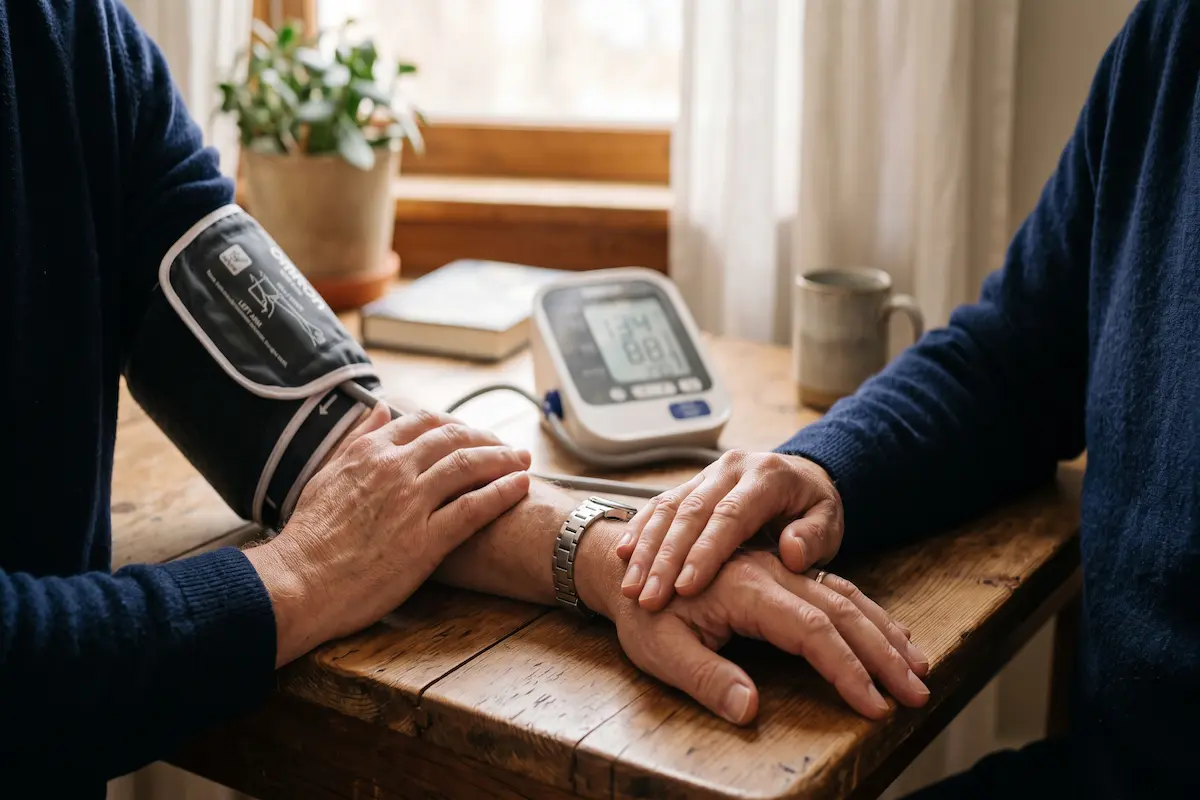
Medically reviewed content. This article is for educational purposes and does not replace advice from your doctor or cardiologist.
You Feel Fine. The Machine Says Otherwise.
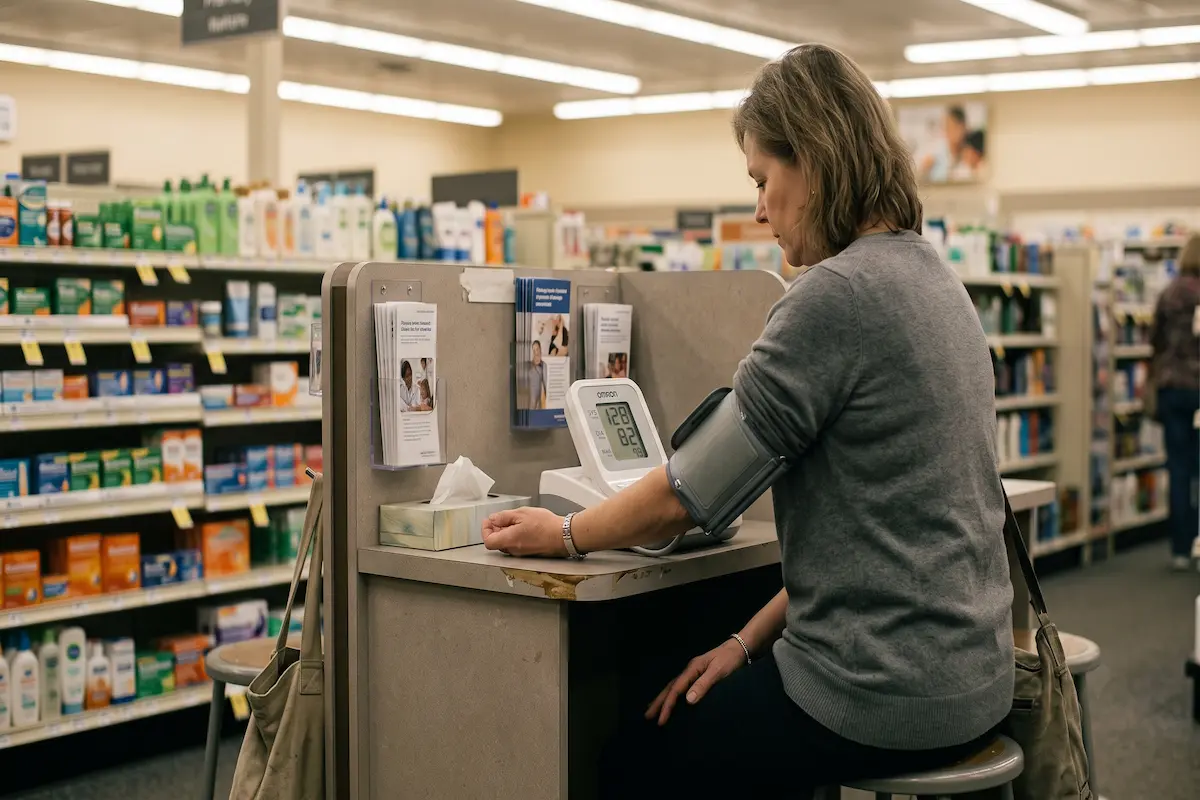
- You sit down at the pharmacy blood pressure kiosk out of boredom while waiting for a prescription. You slide your arm into the cuff. It tightens, hisses, and releases. The number on the screen reads 148 over 94.
- You feel completely normal. There’s no headache, no chest tightness, nothing that hints something is wrong. Yet the machine is telling you something your body never bothered to mention.
- This is the strange, quiet nature of high blood pressure. It rarely announces itself. It builds in the background for years, sometimes decades, while you go about ordinary life feeling nothing unusual at all. By the time symptoms do show up, the condition has often already been shaping your health for a long time.
What is high blood pressure? High blood pressure, also called hypertension, is a condition where the force of blood pushing against your artery walls stays elevated over time. A healthy reading sits below 120/80 mmHg. Readings of 130/80 or higher are generally classified as elevated or hypertensive, depending on how consistently they appear, according to the American Heart Association’s blood pressure categories.
Why a Disease with No Symptoms Is So Dangerous
Doctors have called hypertension the “silent killer” for decades, and the label has earned its place. Unlike a broken bone or a stomach virus, high blood pressure does not interrupt your day. It does not send pain signals to tell you something is wrong.
Instead, it works slowly. Elevated pressure wears down the inner lining of your arteries. Your heart works harder than it should, year after year, to push blood through vessels that have grown stiffer and narrower. Your kidneys, which rely on steady blood flow to filter waste, start to strain under the pressure too.
None of these hurts. Not at first. That is exactly the problem.
Who is most at risk for hypertension? Risk increases with age, particularly after 40, and rises further with a family history of high blood pressure, high sodium intake, low physical activity, excess body weight, chronic stress, and heavy alcohol use. Genetics play a role you cannot control, but lifestyle factors give you real leverage. The CDC reports that nearly half of U.S. adults currently have high blood pressure, and only about one in four of them have it under control.
By the time symptoms like headaches, shortness of breath, or nosebleeds appear, blood pressure has often reached a severe or dangerous level. Waiting for symptoms is not a strategy. Regular monitoring is.
When the Reading Lies: Understanding White Coat Hypertension
Here is a twist that confuses even attentive patients. Sometimes the machine itself seems unreliable.
You go to the doctor and your blood pressure reads high. You go home, check it on your own cuff an hour later, and the number looks completely normal. Which one is telling the truth?
This pattern has a name. It is called white coat hypertension, and it happens when the stress of a clinical setting, the waiting room, the nurse, the doctor walking in, temporarily raises your blood pressure above your everyday baseline. Your body is reacting to the moment, not reflecting your true resting state.
The opposite pattern also exists. It is called masked hypertension, where readings look normal in the office but run high at home or at work, often due to stress, poor sleep, or habits that don’t surface during a short clinical visit.
How do doctors tell the difference? The most reliable method is home blood pressure monitoring over several days, or a 24-hour ambulatory monitor that tracks readings automatically throughout your normal routine. A single office reading is a snapshot. A pattern over time is the real story.
If your numbers seem inconsistent, do not assume the machine is broken or that you are imagining things. Bring a log of home readings to your next appointment and let your doctor look at the full picture rather than one isolated number.
The Weight of the Diagnosis
Getting told you have high blood pressure changes something beyond your arteries. It changes how you think.
Many people describe a shift after diagnosis. Suddenly you notice every flutter in your chest. You start checking your pressure once, then twice, then five times a day. A slightly elevated reading on a stressful Tuesday afternoon sends your mind spiraling, even though blood pressure naturally fluctuates throughout the day for everyone, healthy or not.
This response makes sense. You have just learned that your body can carry a serious problem without giving you any warning. Trusting your own sense of “feeling fine” suddenly feels unreliable.
The healthiest response is not to stop caring or to swing into constant vigilance. It sits somewhere in between. Check your blood pressure on a reasonable schedule, perhaps once or twice a day at consistent times, rather than compulsively. Share the anxious thoughts with your doctor rather than carrying them alone. A diagnosis is information, not a verdict.
If the anxiety around a new diagnosis feels heavier than expected, you are not alone in that experience. Our complete guide to understanding depression and anxiety walks through why health-related worry can spiral and what actually helps.
What Nobody Warns You About the Medication
Starting blood pressure medication often comes with a short conversation and a printed handout. What it rarely comes with is an honest heads-up about daily life on the drug.
Fatigue is common in the first weeks as your body adjusts to lower pressure. Dizziness when standing up quickly, known as orthostatic hypotension, can catch people off guard, especially older adults. Some medications affect sexual function, a topic that patients are often too embarrassed to raise and doctors sometimes forget to mention upfront.
These side effects are a major reason people quietly stop taking their prescriptions. Not out of carelessness. Out of frustration, confusion, or the sense that the cure feels worse than the invisible disease it treats.
What should you do if a blood pressure medication is affecting your daily life? Talk to your doctor before stopping or skipping doses. Many side effects fade after a few weeks as your body adjusts. When they do not, there are usually alternative medications or adjusted dosages that can achieve the same result with a better fit for your life. Stopping abruptly can cause blood pressure to rebound sharply, which carries its own risk.
Nonadherence is not a personal failing. It is a communication gap between what patients experience and what gets discussed in a ten-minute appointment. Closing that gap starts with asking the uncomfortable questions out loud.
What Actually Brings the Numbers Down
Medication is often part of the picture, but lifestyle changes carry real, measurable weight, sometimes enough to avoid medication altogether in early or borderline cases.
- Sodium reduction. Most people consume far more salt than the body needs, largely from processed and restaurant food rather than the salt shaker at home. Cutting back gradually, rather than all at once, tends to stick better long term.
- The DASH approach. The Dietary Approaches to Stop Hypertension (DASH) eating plan, developed by the National Heart, Lung, and Blood Institute, emphasizes vegetables, fruit, whole grains, lean protein, and low-fat dairy, while limiting saturated fat and added sugar. It remains one of the most consistently supported dietary patterns for lowering blood pressure.
- Movement, not necessarily intensity. A brisk 20-to-30-minute walk most days does more for blood pressure than most people expect. Consistency matters more than intensity here.
- Weight and waist size. Even a modest reduction in body weight, often in the range of 5 to 10 percent, can produce a meaningful drop in blood pressure for many people.
- Alcohol and caffeine. Both can cause temporary spikes. Alcohol in particular has a cumulative effect on blood pressure over time, not just an immediate one after drinking.
- Sleep and stress. Poor sleep and chronic stress keep the nervous system in a heightened state, which keeps blood pressure elevated even when diet and exercise are otherwise on track. If sleep is the piece you struggle with most, our complete guide to insomnia covers practical, evidence-based ways to fix it.
None of these changes work as a single fix applied once. They work as a pattern, repeated over months, that slowly convinces your cardiovascular system it no longer needs to stay on high alert.
Living With It, Not Against It
Picture that same pharmacy kiosk again. This time, checking your blood pressure is not a moment of dread. It is a routine glance at a number you already understand, already track, and already have a plan for.
High blood pressure does not have to be an enemy hiding in the background of your life. Once it is named, measured, and managed, it becomes something far more manageable: a number you check, a pattern you follow, and a condition you get ahead of instead of one that catches you by surprise.
The disease itself may stay silent. Your response to it does not have to be.
Enjoyed this article?
If you find the blogs helpful, you can support Chatterlane with a small contribution. Even a cup of coffee helps me continue creating useful, well-researched content.
GET IN TOUCH
Take the Next Step Today
Small, consistent actions now are what keep this condition manageable instead of dangerous. Talk to your doctor, track your numbers, and take the next reading seriously, whatever it says.
Join 900+ subscribers
Small, consistent actions now are what keep this condition manageable instead of dangerous. Talk to your doctor, track your numbers, and take the next reading seriously, whatever it says. For more research-backed health guides like this one, subscribe to the Chatterlane newsletter and get practical, evidence-based content delivered straight to your inbox.
Frequently Asked Questions
What is considered high blood pressure?
Generally, a reading of 130/80 mmHg or higher on repeated measurements is considered high blood pressure, though your doctor will interpret this alongside your personal health history.
Can high blood pressure be reversed naturally?
In many early or borderline cases, sustained changes in diet, activity, weight, sleep, and alcohol intake can bring blood pressure back into a normal range without medication. Established or severe hypertension usually requires medical treatment alongside lifestyle changes.
Is white coat hypertension dangerous?
On its own, it is less concerning than sustained high blood pressure, but Mayo Clinic notes it can still signal a higher long-term risk of cardiovascular disease, so it should not be dismissed without follow-up monitoring.
Why do blood pressure medications cause fatigue?
Many medications work by relaxing blood vessels or reducing fluid volume, which can lower energy temporarily while your body adjusts. This usually improves within a few weeks.
If you are experiencing chest pain, severe headache, vision changes, or shortness of breath alongside a very high blood pressure reading, seek emergency medical care immediately rather than waiting for a routine appointment.